


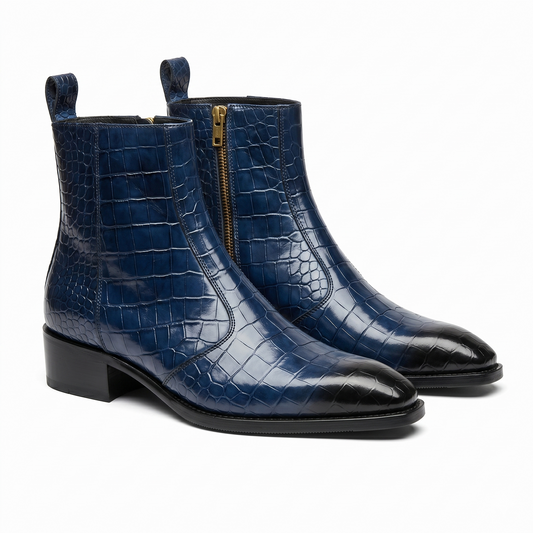


How to Choose the Right Shoe Size for Formal Shoes
Quick Answer: To find your formal shoe size, measure your foot length in centimetres, add 1–1.5 cm for toe room, and match it to a size chart. Always try shoes in the afternoon when your feet are at their largest. For formal leather shoes, go half a size up from your casual size for the best fit.
Why Getting Your Formal Shoe Size Right Matters

Wearing the wrong shoe size is one of the most common — and costly — mistakes men make when buying formal shoes. A shoe that is too tight will cause blisters and long-term foot pain. A shoe that is too loose will create an unpolished look and damage your posture over time.
Formal leather shoes, unlike sneakers or casual footwear, are built with structured uppers, stiff soles, and precise lasts. They do not stretch the same way. This means your sizing approach needs to be different — more deliberate and informed.
At LexaItaliano, every pair of handcrafted formal shoes is built on precision lasts to ensure an accurate, comfortable fit. This guide will walk you through everything you need to know to find your perfect size including how to measure your foot, decode international sizing, and avoid the most common fitting mistakes.
Step 1: How to Measure Your Foot at Home

Before you look at any size chart, you need an accurate measurement of your foot. Here is how to do it correctly:
What You Will Need
• A blank sheet of A4 paper
• A pencil or pen
• A ruler or measuring tape
• A flat, hard floor (not carpet)
Step-by-Step Measurement Guide
1. Step 1: Place the sheet of paper flat on a hard floor and stand on it with your full weight.
2. Step 2: Trace the outline of your foot with the pencil held vertically (do not angle it inward).
3. Step 3: Measure the longest distance from your heel to your longest toe — this is your foot length.
4. Step 4: Measure the widest part of your foot — this is your foot width.
5. Step 5: Repeat for your other foot. Most men have one foot slightly larger. Always size for the larger foot.
|
💡 Pro Tip: Measure your feet in the afternoon or evening. Feet naturally swell during the day due to gravity and activity. Measuring in the morning may give you a reading that is 3–5mm smaller than your actual daytime size. |
Step 2: Understanding Shoe Sizing Systems (UK, US, EU & Indian)

This is where most Indian men get confused. Formal shoes especially premium and imported ones are often labelled in UK, US, or EU sizes. Here is a plain-English breakdown of each system:
UK Sizing
UK sizing is the standard most widely used for formal shoes in India, including by brands like LexaItaliano. UK sizes start from 0 and go up in increments of one-third of an inch. A UK 8 is a very common size for Indian men.
US Sizing
US sizing for men runs approximately 1 full size ahead of UK sizing. So if you are a UK 8, you are a US 9. Always confirm which system a brand is using before you buy.
EU Sizing
European sizing uses a different measurement unit called the Paris point (2/3 of a centimetre). EU sizes tend to be numeric and higher a UK 8 corresponds roughly to EU 42.
Indian Sizing
India does not have a universally standardised sizing system. Most Indian brands follow UK sizing, but some local manufacturers use their own scale. When in doubt, always refer to the foot length in centimetres and match to the brand's chart.
Men's Shoe Size Conversion Chart
|
Foot Length (cm) |
UK Size |
US Size |
EU Size |
Indian Size |
|
24.0 – 24.6 cm |
UK 6 |
US 7 |
EU 39 |
IND 6 |
|
24.7 – 25.3 cm |
UK 6.5 |
US 7.5 |
EU 40 |
IND 6.5 |
|
25.4 – 26.0 cm |
UK 7 |
US 8 |
EU 41 |
IND 7 |
|
26.1 – 26.7 cm |
UK 7.5 |
US 8.5 |
EU 41–42 |
IND 7.5 |
|
26.8 – 27.3 cm |
UK 8 |
US 9 |
EU 42 |
IND 8 |
|
27.4 – 28.0 cm |
UK 8.5 |
US 9.5 |
EU 43 |
IND 8.5 |
|
28.1 – 28.7 cm |
UK 9 |
US 10 |
EU 43–44 |
IND 9 |
|
28.8 – 29.4 cm |
UK 9.5 |
US 10.5 |
EU 44 |
IND 9.5 |
|
29.5 – 30.1 cm |
UK 10 |
US 11 |
EU 44–45 |
IND 10 |
|
30.2 – 30.8 cm |
UK 10.5 |
US 11.5 |
EU 45 |
IND 10.5 |
|
30.9 – 31.5 cm |
UK 11 |
US 12 |
EU 46 |
IND 11 |
Note: These conversions are approximate. Always refer to the specific brand's size chart.
Step 3: How Formal Shoes Fit Differently From Casual Shoes

One of the most important things to understand is that formal leather shoes do not fit the same way as trainers or casual shoes. Here is what changes:
Leather Stretches Over Time
Premium full-grain leather, like that used in LexaItaliano shoes, will stretch and mould to your foot with regular wear. In the first few wears, the shoe should feel snug but not painful. If it is causing sharp pain or cutting into your heel immediately, it is too small.
The Last Shape Affects Fit
The last is the foot-shaped mould around which a shoe is constructed. Different lasts produce different toe shapes — pointed, almond, or round. A pointed-toe shoe on the same last as a round-toe shoe will feel tighter even in the same size. Always check the toe shape before buying.
Sock Thickness Matters
Formal shoes are typically worn with thin dress socks, not thick padded athletic socks. Size your formal shoes while wearing a thin pair of socks, as this is how you will actually wear them.
Width Fitting
Standard shoe widths are labelled as D (regular/medium), E (wide), or 2E (extra wide). Most Indian men have feet that fall in the D to E range. If your foot feels compressed on the sides even in your correct length size, consider looking for a wider-fit option.
|
📏 Width Quick Check: Press your thumb firmly against the widest part of the shoe when your foot is inside. If you feel your foot pressing hard against the leather with no give, the shoe is too narrow for your foot width. |
Step 4: The 5 Key Fit Tests for Formal Shoes

Once you have a pair in hand, run through these five checks before deciding on the size:
1. The Thumb Test (Toe Room)
With your foot fully inside the shoe and heel pushed back, press your thumb down just above your longest toe. You should feel roughly 10–12mm (about the width of your thumb) of space. This is the minimum for comfortable walking without your toes hitting the front.
2. The Heel Slip Test
Stand up straight and walk a few steps. A small amount of heel lift (1–2mm) in a new shoe is normal and will stop once the leather breaks in. If your heel is lifting more than 5mm, the shoe is too large. If your heel has zero movement at all, the shoe may be too small.
3. The Side Squeeze Test
Pinch the leather on the side of the shoe at the widest part of your foot. You should be able to gather a very small amount of leather — around 3–5mm. If there is no leather to pinch, the shoe is too narrow. If there is a large fold of excess leather, it is too wide.
4. The Instep Check
Run your finger across the top of your foot inside the shoe. It should feel secure and supported but not tight. Lace-up shoes like Oxfords and Derbies allow you to adjust fit through the lacing. If the shoe feels very loose even when fully laced, go down half a size.
5. The Walk Test
Walk at least 20–30 steps on a flat surface. Pay attention to any rubbing at the heel, pinching at the toe, or pressure points on the top of your foot. Mild tightness in new leather shoes is normal; sharp discomfort is not.
Step 5: Formal Shoe Sizing for Specific Shoe Styles
Different formal shoe styles can feel different even in the same size. Here is what to keep in mind for each:
Oxford Shoes
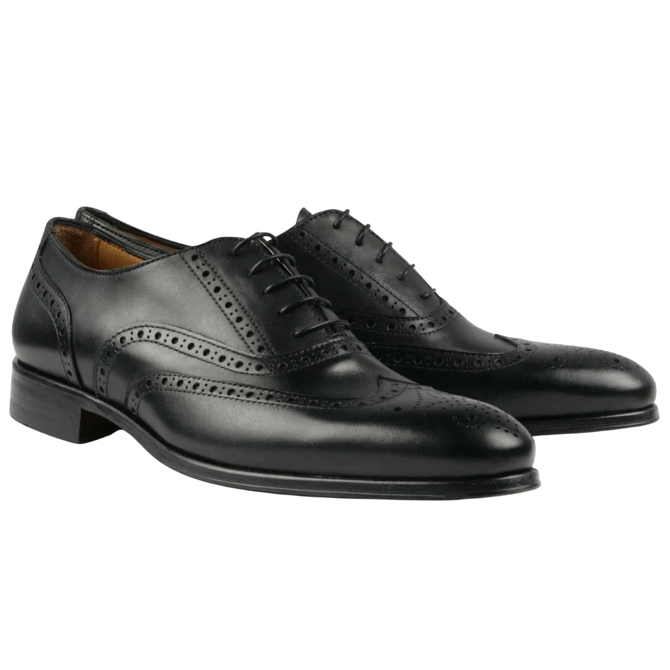
Oxford shoes have a closed-lacing system that makes them less adjustable than other styles. If you are between sizes, go half a size up. Explore LexaItaliano Oxford Shoes if you want to see how Oxford lasts are structured.
Derby Shoes
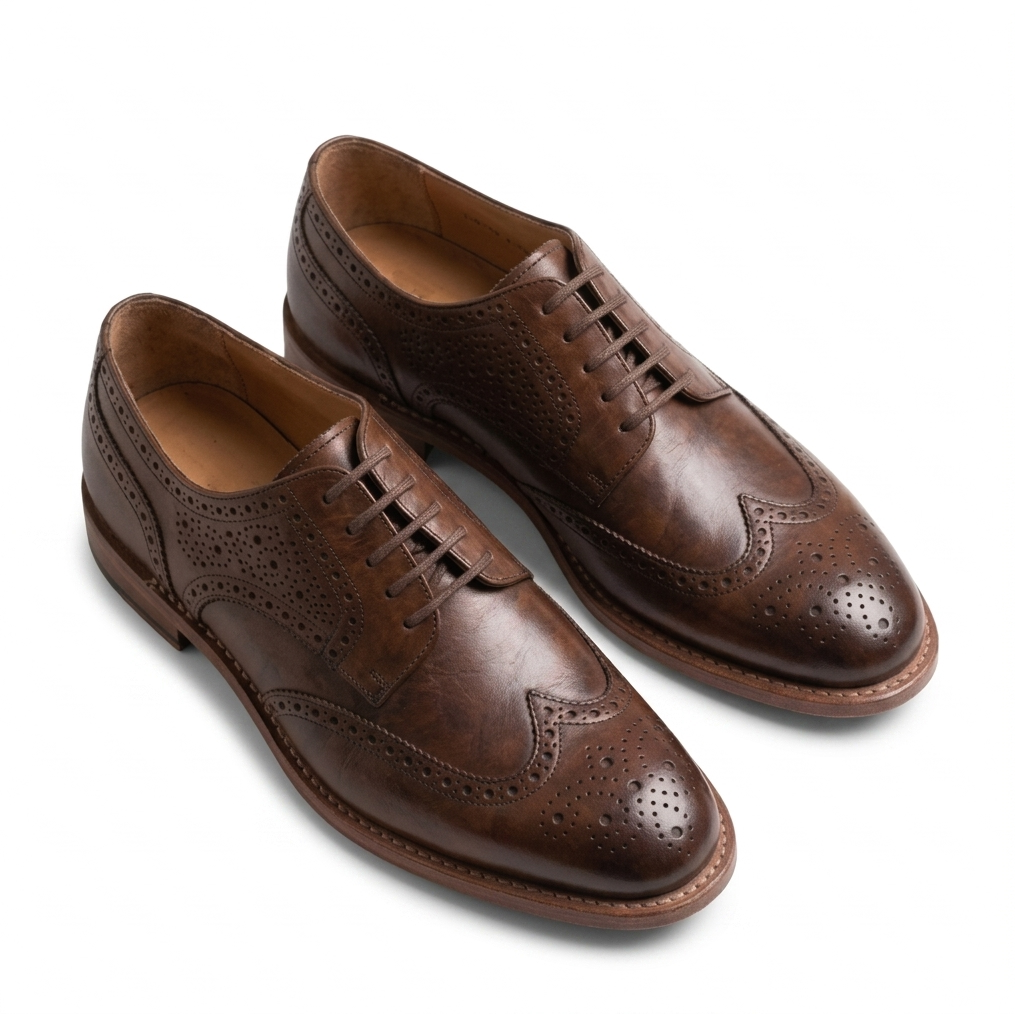
Derby shoes have an open-lacing system that provides more flexibility across the instep. They tend to be more forgiving for wider feet. If you are between sizes, you can go true to size or half a size up. Browse LexaItaliano Derby Shoes for the full collection.
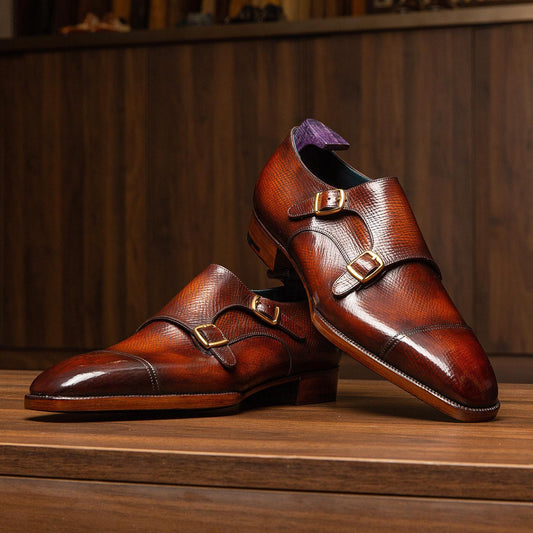
Monk Strap Shoes
Monk straps use a buckle instead of laces, which means they offer very little width adjustment. Men with wider feet should consider going half a size up from their usual size.
Chelsea Boots
Chelsea boots have an elastic side panel that provides some stretch across the width. Sizing is generally true to size, but if you have a high instep, go half a size up to make entry and exit easier.
Loafers
Loafers are slip-ons and tend to run slightly large. Go half a size down from your standard lace-up size for the most secure fit. If you are unsure, explore our Men's Formal Shoe Collection and check each product's sizing notes.
Quick Reference: Sizing Adjustments by Shoe Style
|
Shoe Style |
Sizing Tip |
Best For |
|
Oxford Shoes |
Go half a size up if between sizes |
Slim to regular feet |
|
Derby Shoes |
True to size; more width flexibility |
Regular to wide feet |
|
Monk Strap |
Half a size up for wider feet |
Regular to wide feet |
|
Chelsea Boots |
True to size; half up for high instep |
Regular feet |
|
Loafers |
Half a size down from lace-up size |
Regular feet |
|
Wholecut Oxfords |
True to size; very precise fit |
Slim feet |
Common Shoe Sizing Mistakes Men Make
Avoid these frequent errors when buying formal shoes:
• Buying the same size as your sports shoes. Athletic footwear is built with much more padding and toe room. Formal shoes require a more precise fit.
• Measuring feet only once. Foot size can change over time due to age, weight change, and posture. Re-measure every 1–2 years.
• Sizing only for the dominant foot. Most people have one foot slightly larger. Always fit to your larger foot.
• Ignoring width. Length is only half the equation. A shoe that is the right length but the wrong width will cause long-term discomfort.
• Shopping in the morning. Feet are at their smallest in the morning. Always size shoes in the afternoon for the most accurate fit.
• Assuming the same size across all brands. Different brands use different lasts. Always check the individual brand's size guide.
|
💡 LexaItaliano Tip: All our shoes are crafted on Italian-inspired precision lasts. If you are ever unsure about your size, reach out to our team at lexaitaliano.com/pages/contact — we will help you find the perfect fit. |
How to Break In New Formal Shoes Comfortably
Even when you get the size right, new leather formal shoes need a short break-in period. Here is how to do it without discomfort:
• Wear them for 1–2 hours at a time initially, increasing wear time gradually over the first week.
• Use a shoe stretcher overnight if the toe box feels tight.
• Apply a small amount of leather conditioner to areas that feel stiff to soften the leather.
• Wear thick socks for the first 2–3 wears to help the leather mould faster to your foot shape.
• Insert wooden shoe trees after each wear. This maintains the shape and speeds up the break-in process.
Frequently Asked Questions: Formal Shoe Sizing
Q: Should formal shoes feel tight when new?
A slight snugness is normal in new leather shoes. The leather will soften and mould to your foot within 3–5 wears. However, if you feel sharp pain, pinching, or numbness, the shoes are too small and will not stretch enough to become comfortable.
Q: Is it better to size up or size down for formal shoes?
When in doubt, go half a size up. A shoe that is slightly too long can be managed with a thicker insole or heel pad. A shoe that is too tight will never become comfortable enough for long wear.
Q: How do I know if my formal shoes are the right width?
In the correct width, you should feel gentle contact across the widest part of your foot but no squeezing. You should be able to wiggle your toes slightly. If the leather is bulging or stretching over your foot, the shoe is too narrow.
Q: Do formal shoes stretch over time?
Yes, genuine leather formal shoes do stretch slightly with wear primarily in width, not in length. This is why it is acceptable to buy a shoe that feels snug initially, as long as there is no pain and there is adequate toe room.
Q: What is the best time to try on formal shoes?
Always try on formal shoes in the afternoon or evening when your feet are at their natural daytime size. Feet swell by up to 5–8% during the day, so a shoe bought in the morning may feel too tight by evening.
Q: Can I order LexaItaliano shoes if I am between sizes?
Yes. For lace-up styles like Oxfords and Derbies, go half a size up. For loafers, go half a size down. For further guidance, contact the LexaItaliano team directly.
Q: Does LexaItaliano offer half sizes?
Many styles in the LexaItaliano collection are available in half sizes. Check the individual product page for available sizing options.
Once you know your size, read How Should Formal Shoes Fit? to understand the 6 dimensions of a perfect fit.
Final Takeaway: Get the Size Right, Then Invest in the Best
Choosing the right formal shoe size is not complicated once you know the steps. Measure accurately, understand the sizing system, account for the shoe style, and run the five fit tests before you commit to a purchase.
A well-fitted formal shoe does not just look better it protects your feet, improves your posture, and lasts significantly longer. Premium leather shoes that fit correctly can serve you for a decade with the right care.
Explore the full range of handcrafted formal shoes at LexaItaliano built with precision lasts, full-grain leather, and Italian-inspired craftsmanship for the man who refuses to compromise on fit or quality.




GET SPRING SUMMER LOOKBOOK
Block Quote
Lexaitaliano
Every pair of shoes from LexaItaliano is a masterpiece, crafted with passion and precision. Discover the perfect blend of Italian luxury, impeccable design, and lasting comfort, elevating your style with each step.
At LexaItaliano, we believe that great shoes do more than just complete an outfit—they tell a story. Our collection combines heritage craftsmanship with modern sophistication, offering you shoes that define your style and stand the test of time.
From classic Oxfords to stylish loafers, LexaItaliano offers a curated selection of shoes that combine unparalleled craftsmanship and refined design. Experience the perfect fit, style, and luxury that only Italian-made shoes can provide.


