


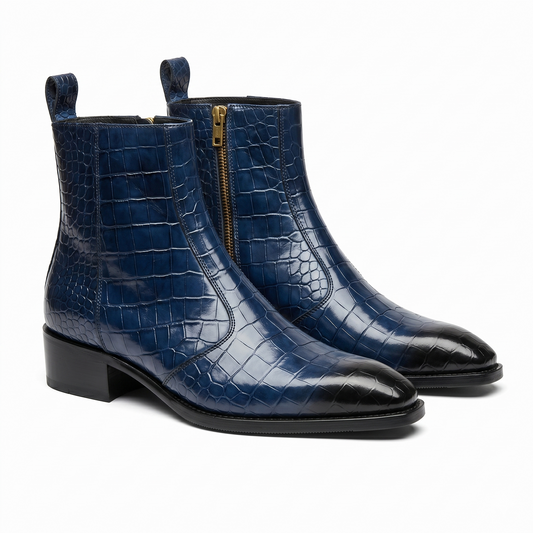


Full-Grain vs. Top-Grain Leather: The Complete Dress Shoe Quality Guide
|
Full-grain leather is the highest quality leather grade — it retains the entire outer surface of the hide, develops a rich patina over time, and can last decades. Top-grain leather is sanded to remove surface imperfections, making it more uniform but less durable long-term. For dress shoes, full-grain leather is the superior choice for quality, aging, and investment value. |

When you are shopping for dress shoes, the words on the label matter more than the look in the display case. Two shoes can appear nearly identical in a store same silhouette, same shine, same price point yet one will develop a beautiful patina and outlast its owner, while the other will crack, peel, and look tired within two years.
The difference? Leather grade.
Understanding the difference between full-grain and top-grain leather is one of the most practical things a man can know before investing in formal footwear. This guide breaks it down completely what each grade is, how they differ, how to identify them when shopping, and which shoe styles deserve which leather.
If you value quality over illusion, this guide is for you. And if you want to see what genuinely premium leather looks like in a dress shoe, the LexaItaliano formal shoe collection at lexaitaliano.com sets the standard.
Why Leather Grade Matters in Dress Shoes
Leather grading refers to the quality of the hide based on which layer of the skin is used and how much processing it has undergone. The less a hide is altered from its natural state, the higher the grade and typically, the better the performance.
In dress shoes, the leather is the most critical material. It directly determines:
• How long the shoe lasts before cracking or peeling
• How the shoe breathes and shapes to your foot
• Whether it ages gracefully or deteriorates
• How easy it is to care for and restore
• The resale or heirloom value of the shoe
Most buyers focus on the style oxford, derby, monk strap or the brand name. But two identical-looking oxfords made from different leather grades will deliver completely different ownership experiences over three to five years. This is why leather grade is the single most important specification in a quality dress shoe.
The Anatomy of a Leather Hide Understanding the Layers

To understand leather grades, you need to understand what a hide looks like when it is split apart. A raw animal hide has three main layers:
|
Layer |
Position |
Characteristics |
|
Grain Layer |
Outermost (top) |
Densest fibers, most durable, retains natural surface texture |
|
Junction Layer |
Middle |
Transition zone — less dense than grain layer |
|
Corium / Flesh Layer |
Innermost |
Loosest fibers, used for suede and corrected leathers |
The grain layer is the prized portion. Its tight, interlocking fiber structure makes it the most durable and breathable part of the hide. The further you move into the hide, the looser and weaker the fibers become.
Leather grades are essentially defined by how much of the grain layer is preserved — or how much has been sanded away, buffed, or corrected. The more natural surface retained, the higher the grade.
Full-Grain Leather — The Gold Standard

What Is Full-Grain Leather?
Full-grain leather uses the entire outer grain layer of the hide with no sanding, buffing, or correction of the surface. The natural markings, pores, minor scars, and texture variations are all preserved. This is leather in its most authentic form.
Because the surface is completely intact, the tight fiber structure provides maximum durability and breathability. Over time, full-grain leather develops a patina — a rich, deepening sheen that comes from the natural oils of the hide interacting with light and air. This is something that cannot be replicated artificially.
Key Characteristics of Full-Grain Leather
• Natural surface markings and grain patterns visible
• Develops patina that improves appearance over years
• Highly breathable — pores remain open
• The most durable leather grade available
• Responds well to conditioning and polish
• Each pair is unique due to natural hide variations
Pros of Full-Grain Leather in Dress Shoes
• Unmatched longevity — well-maintained full-grain shoes can last 10–20 years
• Character improves with age — creases and patina look distinguished, not worn
• Requires minimal intervention — a good conditioner and polish is all it needs
• Better investment value — cost per year of use is often lower than cheaper alternatives
Cons of Full-Grain Leather
• Higher upfront price point
• Requires consistent care — neglect shows faster
• Natural markings may not suit buyers who prefer a perfectly uniform surface
|
LexaItaliano Recommendation If you are buying one pair of dress shoes and want them to last, choose full-grain leather. The LexaItaliano Oxford Collection and formal shoe range uses premium leather crafted for lasting elegance. Visit: lexaitaliano.com/collections/oxford-shoes |
Top-Grain Leather — The Industry Middle Ground
What Is Top-Grain Leather?
Top-grain leather is the second-highest grade. It is taken from the same outer portion of the hide as full-grain but undergoes a sanding or buffing process to remove natural surface imperfections — scars, bug bites, and texture irregularities. After sanding, an artificial grain pattern is often embossed onto the surface to restore a consistent look.
The result is a leather that looks more uniform and 'perfect' than full-grain, but has a compromised surface structure.
Key Characteristics of Top-Grain Leather
• Smooth, uniform surface with consistent texture
• Thinner than full-grain due to surface removal
• Often finished with a polymer or lacquer coating
• Less breathable than full-grain
• Does not develop a true natural patina
Pros of Top-Grain Leather
• More affordable than full-grain
• More water and stain resistant due to finish coating
• Consistent, clean appearance from day one
• Widely available across mid-range dress shoe brands
Cons of Top-Grain Leather
• The artificial finish can crack, peel, or wear off over time
• Does not age as gracefully — wears out rather than matures
• Less breathable, which affects comfort on long wear days
• Once the finish deteriorates, the shoe is difficult to restore
Full-Grain vs. Top-Grain — Direct Comparison

|
Factor |
Full-Grain Leather |
Top-Grain Leather |
|
Durability |
Exceptional — 10-20+ years with care |
Good — 5-8 years typically |
|
Aging |
Develops beautiful patina |
Wears out, finish degrades |
|
Breathability |
Excellent — natural pores open |
Moderate — surface coating restricts |
|
Appearance |
Natural markings, unique texture |
Uniform, consistent, 'perfect' |
|
Price |
Higher upfront investment |
More affordable |
|
Maintenance |
Regular conditioning, polish |
Easy wipe-down but harder to restore |
|
Resale/Heirloom Value |
High |
Low |
|
Best For |
Investment dress shoes, formal wear |
Daily casual formal, entry-level |
Bottom line: If you plan to wear your dress shoes more than 30 times a year, full-grain leather will cost less per wear over its lifetime than top-grain. Top-grain makes sense for occasional wear or when budget is the primary constraint.
Other Leather Grades You Should Know
Corrected-Grain Leather
This is full or top-grain leather with heavy surface correction — sanded even more aggressively and embossed with a deep artificial grain. It has less of the original fiber structure intact and is more plastic-like in feel. Common in mass-market dress shoes.
Genuine Leather — The Marketing Trap
Despite sounding premium, 'genuine leather' is actually a low grade. It is made from the layers left over after the full-grain and top-grain have been split off. It has a loose fiber structure, cracks easily, and deteriorates quickly. Any dress shoe labeled merely 'genuine leather' without specifying the grade is a red flag.
Bonded Leather — Avoid Entirely
Bonded leather is not real leather in any meaningful sense. It is a mix of leather scraps and fibers bonded together with polyurethane or latex. It will crack and peel within months of regular wear. It has no place in a quality dress shoe.
Suede and Nubuck
Suede is made from the inner split of the hide soft and pliable but less durable. Nubuck is full-grain leather that has been lightly buffed on the outer surface to create a soft nap. Both are legitimate options for casual dress and certain styles like loafers and casual derby shoes, but they require different care routines.
How to Identify Leather Grade When Shopping
The Bend Test
Flex the shoe gently. Full-grain leather will crease in a natural, organic way with fine lines. Top-grain will crease but the artificial finish may show as a lighter, more abrupt fold. Bonded or corrected leather may crack or show a coating separating from the base.
The Scratch Test
Lightly drag a fingernail across the surface. Full-grain leather will show a faint white scratch that can be rubbed away. Top-grain leather with a heavy coating will not show this. The scratch test reveals whether the surface is genuine leather or a synthetic coating over leather.
Reading Product Descriptions
• Look for terms: 'full-grain', 'vegetable-tanned', 'calf leather', 'museum calf' — these signal quality
• Be cautious of: 'genuine leather', 'bonded leather', 'PU leather', 'synthetic upper'
• The absence of specific leather grade information is itself a signal
Leather Grade by Shoe Style — What to Look For
Oxford Shoes — Full-Grain Is Non-Negotiable
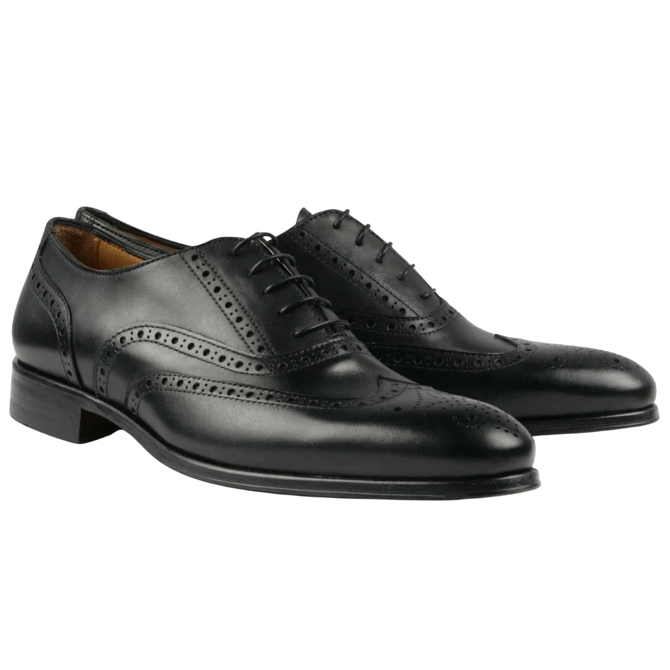
Oxfords are the most formal shoe in a man's wardrobe. Their closed lacing and sleek profile demand leather that can hold a high-shine polish and age with dignity. Full-grain calf leather — ideally from European tanneries — is the correct choice. LexaItaliano's Oxford Collection (lexaitaliano.com/collections/oxford-shoes) is built on this standard, from the Classic Black Leather Oxford to the Tan Plain-Toe Oxford.
Derby Shoes — Full-Grain or Quality Top-Grain
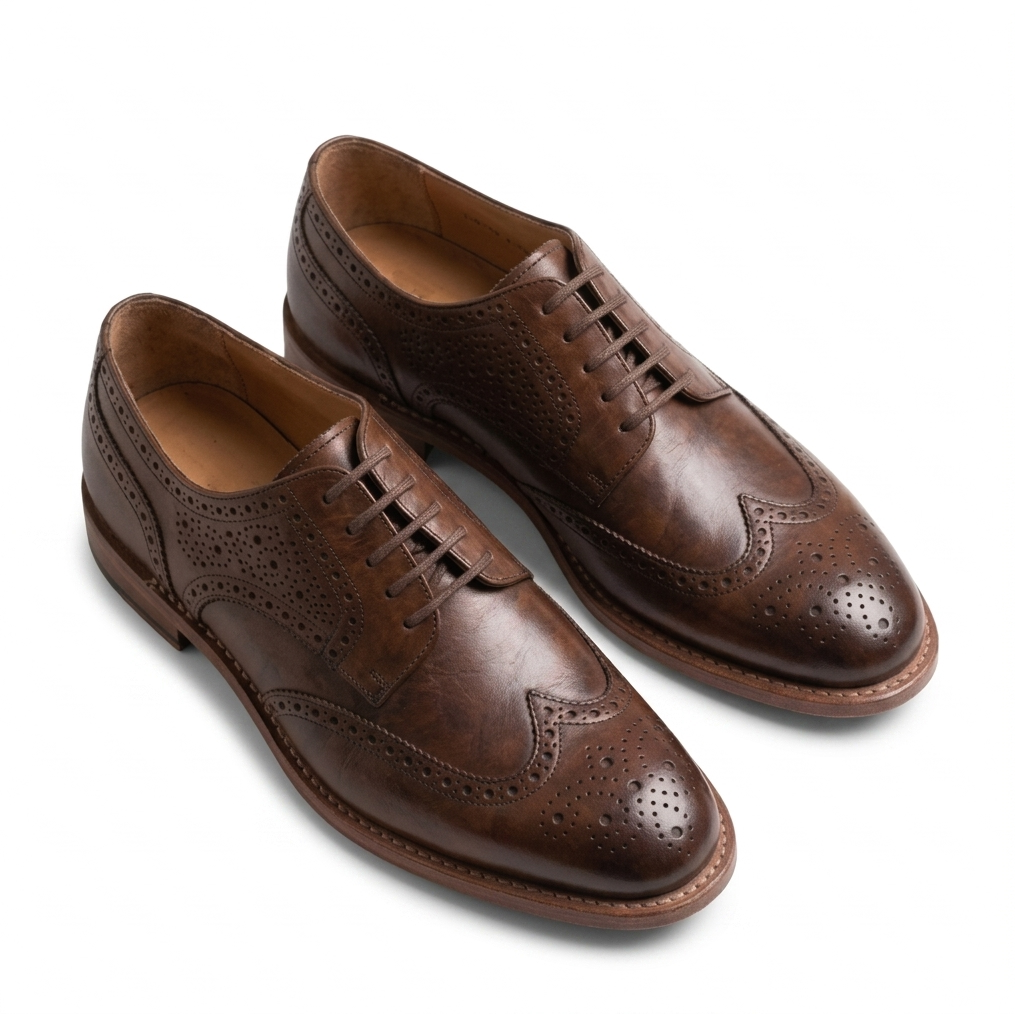
Derby shoes are slightly more casual than oxfords due to their open lacing. Full-grain leather is ideal for formal derbies, while quality top-grain can work for office wear. The LexaItaliano Derby Collection (lexaitaliano.com/collections/derby-shoes) includes styles like the Dark Brown Woven Derby and Black High-Shine Derby that demonstrate how premium leather elevates the silhouette.
Monk Strap Shoes — Character Leather Shines
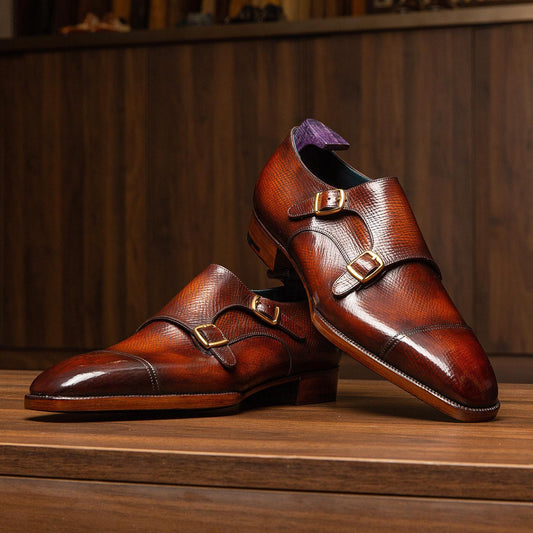
Monk straps carry a bolder personality, and full-grain leather with distinctive grain patterns — croc texture, museum calf, or burnished finishes — enhances their presence. See the Monk Strap Collection at lexaitaliano.com/collections/monk-strap.
Loafers — Context Determines Grade
For business loafers, full-grain is still recommended. For casual wear, quality top-grain or even suede works beautifully. The LexaItaliano Loafer Collection (lexaitaliano.com/collections/men-loafers) covers both formal and relaxed loafer styles in premium leather.
Boots — Full-Grain for Durability
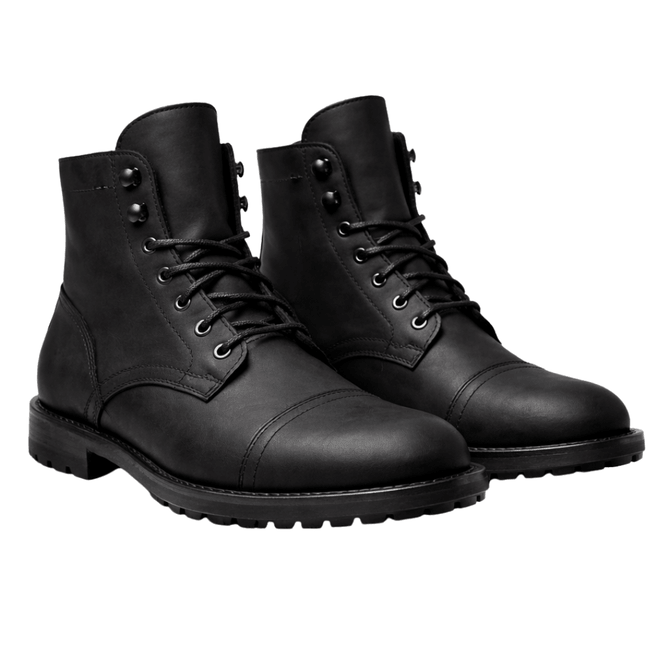
Leather boots face weather, friction, and hard wear that dress shoes do not. Full-grain leather's sealed surface and structural integrity make it the only sensible choice. The LexaItaliano Boots Collection (lexaitaliano.com/collections/mens-boots) includes Chelsea boots, brogue boots, and ankle boots in durable full-grain uppers.
Caring for Full-Grain vs. Top-Grain Leather
Cleaning
Full-grain leather: use a soft brush or damp cloth to remove dirt. Avoid harsh soaps.
Top-grain leather: a damp cloth works well due to the surface coating. Avoid petroleum-based cleaners.
Conditioning
Full-grain leather needs regular conditioning (every 2–3 months) with a quality leather conditioner or cream. This keeps the fibers supple and prevents cracking. Top-grain leather benefits from conditioning but the surface coating reduces absorption — use sparingly.
Polishing
Full-grain leather develops a mirror shine with quality wax or cream polish — the natural pores absorb the polish and build depth over time. Top-grain leather can be polished but the finish is more superficial.
Storage
• Always use cedar shoe trees to maintain shape and absorb moisture
• Store in dust bags or shoe boxes away from direct sunlight
• Never store in plastic — leather needs to breathe
• Rotate pairs to allow the leather to rest between wears
FAQ — Frequently Asked Question
Is full-grain leather worth the higher price?
Yes. Full-grain leather shoes cost more upfront but last significantly longer than top-grain or corrected-grain alternatives. When you calculate cost per year of use, full-grain leather is often the more economical choice. Additionally, quality full-grain shoes can be resoled and restored, extending their life indefinitely.
Does full-grain leather last longer than top-grain?
Yes. Full-grain leather typically lasts two to three times longer than top-grain under comparable care conditions. The intact fiber structure of full-grain leather resists cracking, while the artificial finish on top-grain leather degrades over time and is difficult to restore once it begins to peel.
Can you tell the difference between full-grain and top-grain leather by looking?
Sometimes. Full-grain leather often shows natural surface variations — slight texture differences, pore visibility, and irregular grain patterns. Top-grain leather looks more uniform and 'perfect.' However, many top-grain leathers are finished to look like full-grain. The most reliable tests are the bend test, the scratch test, and reading the product specifications carefully.
What leather grade do luxury shoe brands use?
Genuine luxury shoe brands Berluti, John Lobb, Edward Green, Crockett & Jones — exclusively use full-grain calf leather for their upper materials. Many specify additional grades within full-grain: box calf (tight grain), museum calf (antiqued finish), and shell cordovan (from horsehide). In India, LexaItaliano uses premium full-grain leather in its handmade dress shoe collection, offering luxury-grade quality at accessible price points.
Are LexaItaliano shoes made from full-grain leather?
LexaItaliano specialises in premium handmade leather shoes crafted for men who value quality and craftsmanship. The formal shoe collection including Oxfords, Derbies, and Monk Straps uses quality leather uppers designed to age well and hold their form. You can explore the full collection and product specifications at lexaitaliano.com/collections/all.
How do I maintain full-grain leather dress shoes?
Clean them after each wear with a soft brush, condition every two to three months with a quality leather cream, polish weekly with a matching wax or cream polish, and store with cedar shoe trees in a dust bag. Avoid soaking them in water and allow them to dry naturally if they get wet.
What is the difference between full-grain leather and genuine leather?
'Genuine leather' is actually a low-quality grade, not a mark of authenticity. It is made from the leftover layers after full-grain and top-grain have been removed. Full-grain leather is the opposite end of the spectrum the highest grade, made from the outermost layer of the hide with no correction. Despite what the name implies, 'genuine leather' is among the worst grades available.
Conclusion Choose Your Leather as Carefully as You Choose Your Style

The difference between a dress shoe that looks ordinary in five years and one that looks distinguished in twenty years often comes down to a single decision made at the point of purchase: the leather grade.
Full-grain leather is not just a material it is a commitment to quality. It ages with you, absorbs your story in its patina, and rewards careful maintenance with decades of reliable service. Top-grain leather is a reasonable middle ground for budget-conscious buyers or occasional wearers, but it will never match the character or longevity of full-grain.
When shopping for dress shoes, look beyond the silhouette and price tag. Ask what leather the shoe is made from. Check the product description for grade terms. Do the bend test and the scratch test. And if the seller cannot tell you what grade of leather they use, that itself is your answer.




GET SPRING SUMMER LOOKBOOK
Block Quote
Lexaitaliano
Every pair of shoes from LexaItaliano is a masterpiece, crafted with passion and precision. Discover the perfect blend of Italian luxury, impeccable design, and lasting comfort, elevating your style with each step.
At LexaItaliano, we believe that great shoes do more than just complete an outfit—they tell a story. Our collection combines heritage craftsmanship with modern sophistication, offering you shoes that define your style and stand the test of time.
From classic Oxfords to stylish loafers, LexaItaliano offers a curated selection of shoes that combine unparalleled craftsmanship and refined design. Experience the perfect fit, style, and luxury that only Italian-made shoes can provide.


