




Best Formal Shoes for Wide Feet: Men's Complete Fit & Buying Guide
Many formal shoes are built on narrow lasts, the foot-shaped forms a shoe is made around, because a slim profile looks sharp. If your feet are broad, that design choice shows up as pinching across the ball of the foot, a sore little toe by mid-afternoon, or a size bought too long just to gain width.
The fix is rarely a bigger size. It comes from matching your foot to the right style, lacing, leather and construction. This guide explains how to confirm you have wide feet, how to measure them at home, and which formal shoes fit best, so you can buy with confidence.
|
Quick Answer
The best formal shoes for wide feet are derbies and double monk straps in full-grain leather, built on a roomy last with a rounded or soft square toe. Open lacing or a buckle strap lets you adjust fit across the widest part of your foot. Choose Goodyear welted construction when possible, because the footbed and leather shape to your foot with wear. |

How Do You Know If You Have Wide Feet?
You likely have wide feet if shoes that fit in length still feel tight across the ball of the foot. Common signs include:
• Pressure or soreness at the base of the big toe or little toe after a few hours of wear
• The leather bulging or creasing sharply on the outer side of the shoe
• Lace-up shoes where the two eyelet rows pull almost together when tightened
• A habit of buying a full size up for width, followed by heel slip
• Red marks along the sides of the foot when you take your shoes off
Persistent pain, numbness or visible changes in the foot are worth showing to a podiatrist. Shoe choice improves fit, but it is not a medical treatment.
How to Measure Your Foot Width at Home

A two-minute home measurement gives you a number to compare against any brand size guide.
1. Measure in the evening. Feet are at their largest at the end of the day.
2. Wear formal socks. Use the same thin socks you wear with dress shoes.
3. Stand on a sheet of paper with your heel against a wall and your weight evenly on both feet.
4. Trace your foot with the pen held straight up, then step off.
5. Measure the widest point across the ball of the foot, between the joints of the big toe and little toe, in millimetres.
6. Repeat for the other foot and use the larger measurement.
Check length against the LexaItaliano sizing chart, which converts between EU, UK and US sizes in half-size steps.
Shoe Width Labels Explained
Width labels depend on the country of the brand. Use this as a reference when a size guide lists a letter.
|
Width |
US label |
UK label |
What it means |
|
Standard |
D |
F |
Fits most feet |
|
Wide |
E |
G |
More room across the ball and instep |
|
Extra wide |
EE (2E) |
H |
Noticeably broader forefoot and higher volume |
Many Indian brands label length only. Before ordering, ask for the last shape and the internal width at the ball of the foot.
What Makes a Formal Shoe Good for Wide Feet?

A roomy last and a rounded toe
The last decides everything. A rounded or soft square toe box lets the toes spread, while pointed and chisel toes squeeze the forefoot. Judge the shoe by its width at the ball of the foot, not only by the toe shape.
Open lacing or an adjustable closure
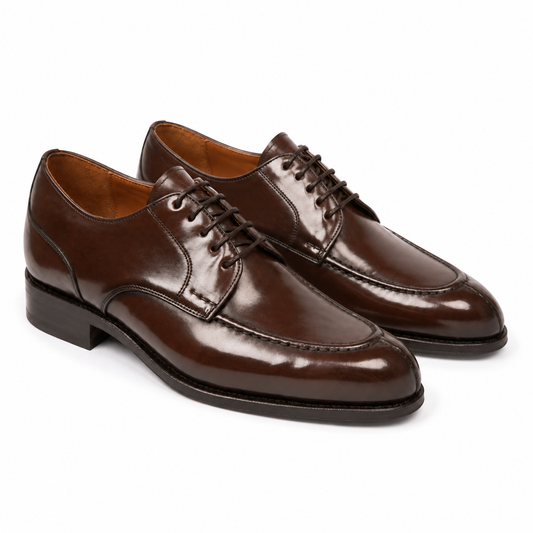
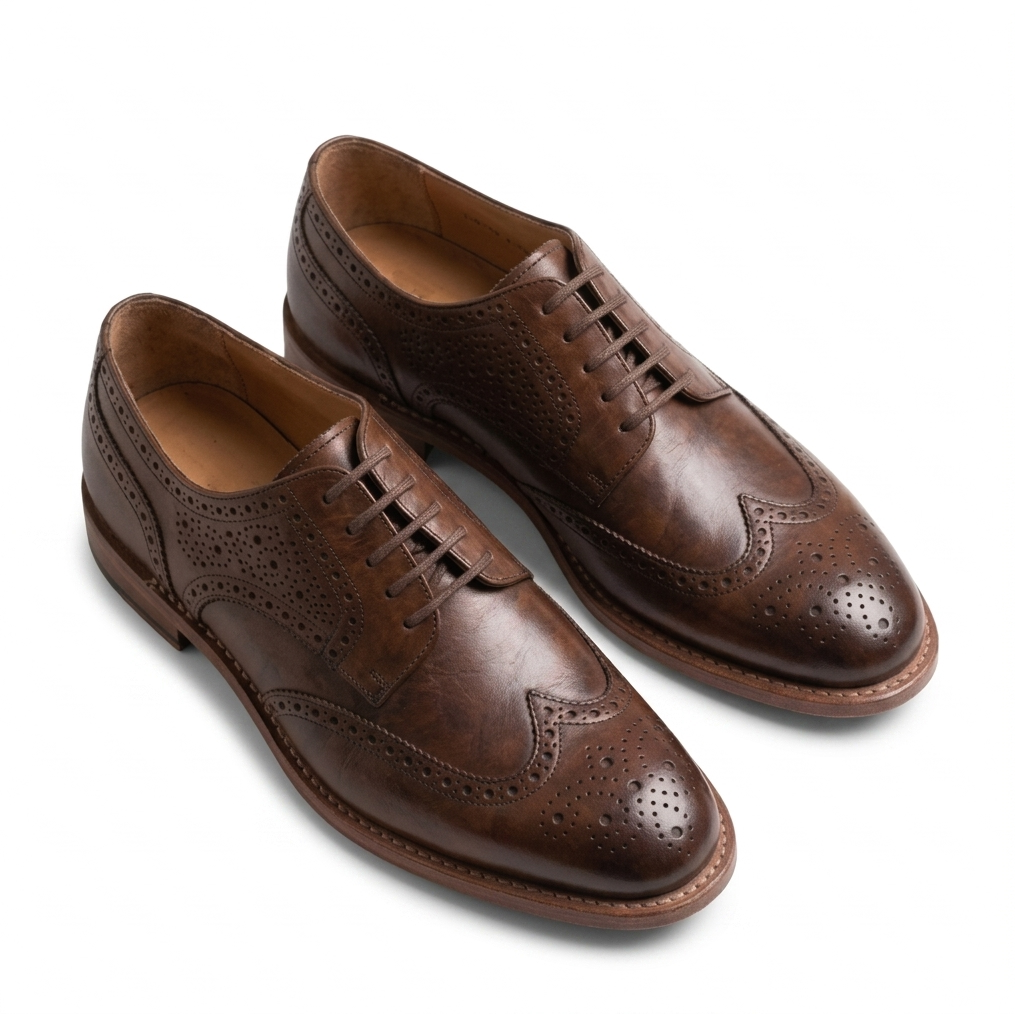
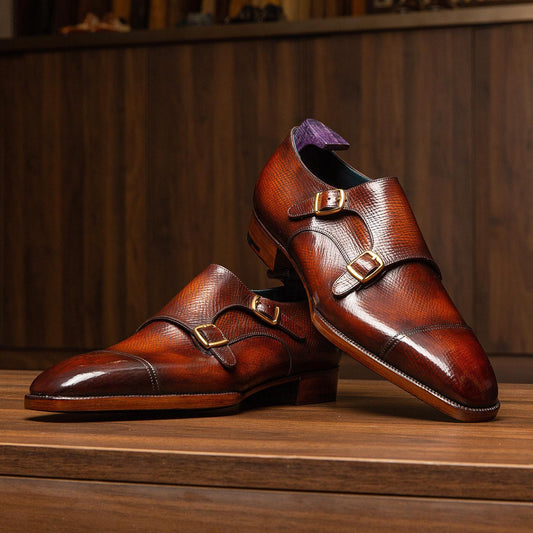
A derby has open lacing, so the quarters flare outward to fit a broad instep. A double monk strap closes with two buckles you can loosen or tighten, which controls volume without pressure from laces.
Full-grain leather
Full-grain leather softens and moulds to the foot, while corrected or heavily coated leather stays stiff at the pressure points. Suede stretches easily but reads as less formal, and our leather vs suede guide explains where each belongs. The Leather Guide covers grades in detail.
Goodyear welted construction
Goodyear welting does not widen a shoe, but many welted pairs use a cushioned footbed that shapes to your foot over time, and the sole can be replaced when it wears out. Read the Goodyear welted and cemented pages to compare the two.
A smooth lining and a cushioned footbed
Seams or ridges inside the shoe press hardest where a wide foot already feels tight. A smooth leather lining and a cushioned footbed reduce that friction through a full workday.
Best Formal Shoe Styles for Wide Feet

Closure style changes how much room you get more than any other factor. This comparison is a general guide, and the last of each individual shoe still matters.
|
Style |
Fit for wide feet |
Why |
Best for |
|
Derby |
Best |
Open lacing flares to fit a broad forefoot and instep |
Office wear, business casual, formal events |
|
Double monk strap |
Best |
Two buckles adjust volume with no laces pressing |
Suits and smart casual |
|
Oxford |
Good, with a roomy last |
Closed lacing is snug, so the last must be generous |
Interviews, weddings, black tie |
|
Penny loafer |
Good |
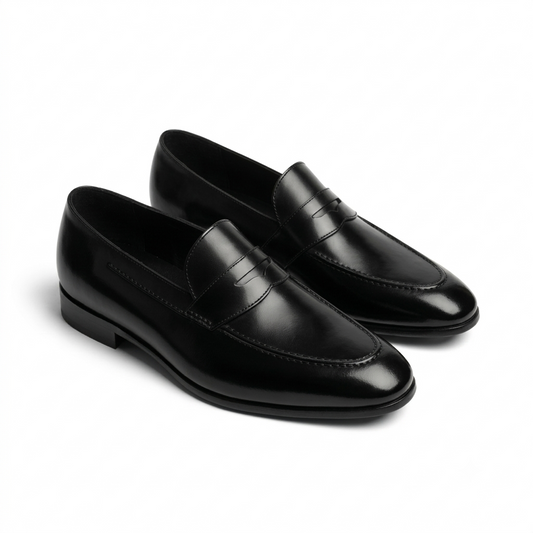
Slip-on with no laces, but no adjustment either |
Smart casual and travel |
|
Chelsea or dress boot |
Moderate |
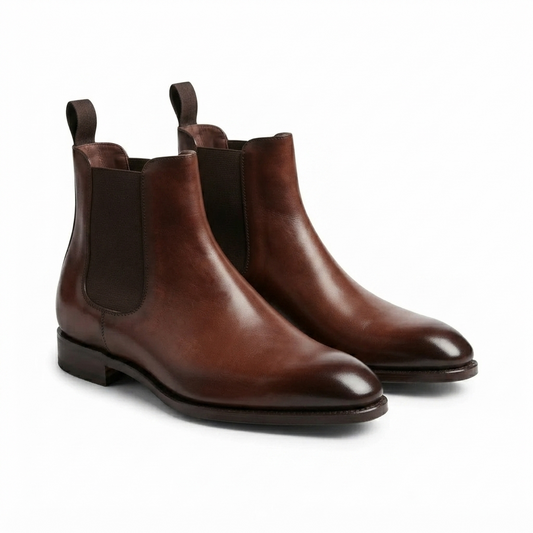
Elastic gussets add ankle give, not forefoot room |
Autumn and winter tailoring |
Derby shoes
Start with the Derby Shoes collection. The Black and Brown Leather Wingtip Brogue Derby Shoes are available with a Goodyear welted option, and the Burnished Tan Derby is a plainer choice for the office. Our brogue guide explains which perforation level suits which occasion.
Monk strap shoes
The Monk Strap collection suits men who want a buckle-adjustable fit without laces. Pick a leather upper over patent finishes, because patent leather stretches very little.
Oxford shoes
If you need the formality of an Oxford, choose a plain or cap toe with a rounded profile from the Oxford Shoes collection, such as the Norwegian Shoes in Armagnac Leather. Our cap toe vs plain toe guide helps you pick between the two.
Should You Size Up for Wide Feet?
Sizing up half a size can add width, but it adds length faster, and extra length lets the heel slip and creases the toe box in the wrong place. Follow this order instead:
• Choose a roomier style first, such as a derby or monk strap.
• Try your usual size and check whether the ball of the foot sits comfortably at the widest part of the shoe.
• Go up half a size only if the sides still pinch and your toes keep about a thumb width (1 to 1.5 cm) of space at the front.
• If you are between sizes, message the team before ordering rather than guessing.
How to Test the Fit of Formal Shoes for Wide Feet
Run through this checklist when you try on a pair, at home or in a store:
• Try shoes in the evening with formal socks.
• Confirm the widest part of your foot sits at the widest part of the shoe.
• Wiggle your toes freely without them touching the sides.
• Check that your heel stays put, with only a few millimetres of lift when you walk.
• Laced shoes should not close completely at the eyelets.
• Walk for five minutes and look for pressure points at the sides of the toes.
Ordering online is easier when returns are simple. LexaItaliano offers free shipping across India and accepts returns within 7 days of delivery, so check the condition requirements on the product page before you wear a pair outdoors.
How to Make Formal Shoes More Comfortable for Wide Feet
• Break them in gradually. Wear new shoes for one to two hours a day for the first week.
• Use shoe trees. Shoe trees hold the shape and ease creasing between wears.
• Use a shoe horn. A shoe horn protects the heel counter, which keeps the fit stable.
• Rotate pairs. Leather needs a day to dry out and recover its shape.
• Condition the leather. A shoe care kit keeps leather supple, and our cleaning guide shows the steps.
• Ask a cobbler. A professional can stretch leather slightly at the ball of the foot.
Common Mistakes When Buying Formal Shoes for Wide Feet
• Buying by length alone and ignoring width
• Choosing pointed or chisel toes for the look
• Picking stiff patent or heavily coated leather
• Sizing up a full size and accepting heel slip
• Trying shoes on in the morning, when feet are smallest
• Ignoring construction, which decides how a shoe ages
Where to Start at LexaItaliano
Begin with the Derby Shoes and Monk Strap collections, and browse the full Formals Shoes range for more options. Many styles are available with a Goodyear welted option, and sizes run in half-size steps on the sizing chart. If you are between sizes or unsure about width, message the team on WhatsApp at +91 92194 11900 before ordering, or look at Custom Made Shoes.
Frequently Asked Questions
What are the best formal shoes for wide feet?
The best formal shoes for wide feet are derbies and double monk straps in full-grain leather, built on a roomy last with a rounded or soft square toe. Open lacing or buckle adjustment lets you control fit across the widest part of the foot, and Goodyear welted construction softens and shapes to the foot with wear.
Are Oxford shoes bad for wide feet?
Oxfords are not automatically bad, but their closed lacing is the least forgiving of the formal styles. They work for wide feet when the last is generous and the toe is rounded. If the sides pinch, switch to a derby, which opens wider across the forefoot and instep.
Should men with wide feet size up?
Size up by half a size only when the shoe is tight across the ball but the length is already right. A longer shoe adds length faster than width, which causes heel slip and toe-box creasing. Try a roomier style in your usual size first.
How do I know if a formal shoe is too narrow?
A formal shoe is too narrow if the ball of your foot overhangs the sole edge, the little toe feels pressed, or the leather bulges and creases sharply at the sides. A good fit holds the heel firmly and lets your toes spread without pressure.
Can leather formal shoes stretch for wide feet?
Full-grain leather softens and stretches slightly with regular wear, and a cobbler can stretch the leather at the ball of the foot. Stretching cannot fix a shoe that is too short or far too narrow, and stiff patent or coated leather stretches very little.
Is Goodyear welted construction better for wide feet?
Goodyear welting does not make a shoe wider, but it supports a footbed that shapes to your foot over time and allows resoling. That makes welted shoes more comfortable to live with long term than most cemented pairs.
What toe shape is best for wide feet?
Round and soft square toes are best for wide feet because they leave room for the toes to spread. Pointed and chisel toes narrow the forefoot and are the most common cause of side pressure in formal shoes.
The Bottom Line
Wide feet need the right design, not a bigger size. Pick a derby or double monk strap, look for full-grain leather and a rounded toe, measure your width at home, and test the fit in the evening. With those four steps, formal shoes stop being a daily compromise.


GET SPRING SUMMER LOOKBOOK
Block Quote
Lexaitaliano
Every pair of shoes from LexaItaliano is a masterpiece, crafted with passion and precision. Discover the perfect blend of Italian luxury, impeccable design, and lasting comfort, elevating your style with each step.
At LexaItaliano, we believe that great shoes do more than just complete an outfit—they tell a story. Our collection combines heritage craftsmanship with modern sophistication, offering you shoes that define your style and stand the test of time.
From classic Oxfords to stylish loafers, LexaItaliano offers a curated selection of shoes that combine unparalleled craftsmanship and refined design. Experience the perfect fit, style, and luxury that only Italian-made shoes can provide.