




Goodyear Welt vs Cemented Shoes: Which Is Better
|
Quick Answer Goodyear welt construction is the better choice for anyone who wants shoes that can be resoled and worn for decades, while cemented construction suits buyers who want a lighter, more affordable shoe for occasional or short-term use. A Goodyear welted shoe stitches the upper, welt, and sole together, so the sole can be replaced repeatedly without harming the shoe. A cemented shoe glues the sole directly to the upper, which keeps the price and weight down but limits repairability. For formal wear, daily office use, or a long-term investment, Goodyear welted shoes are the stronger pick. |
Why Shoe Construction Matters More Than the Leather
Most first-time buyers focus on leather quality, color, and toe shape when choosing formal shoes. The construction method, meaning how the sole is attached to the upper, decides how long the shoe survives, how it feels after the first year, and whether it can be repaired or has to be thrown away. Two methods dominate the men's formal shoe market: Goodyear welt construction and cemented construction. This guide compares both in detail so you can pick the right one for your budget, your climate, and how often you plan to wear the shoe.What Is Goodyear Welt Construction
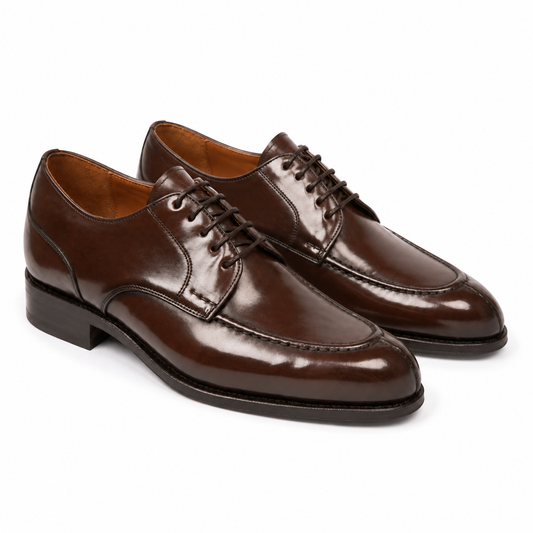
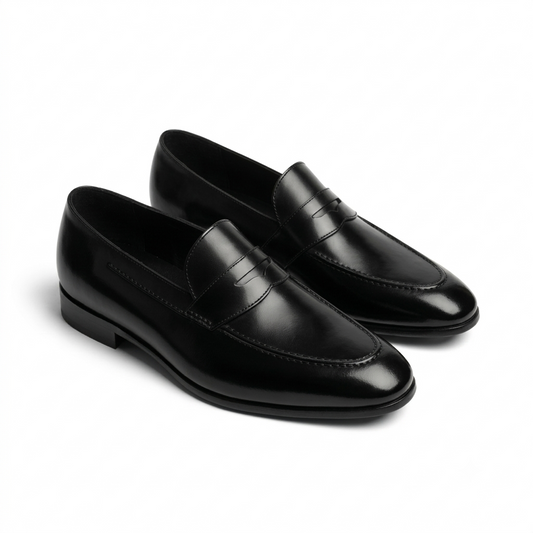
If you want to see the difference in person, LexaItaliano stocks both constructions across its Oxford shoes, Derby shoes, and monk strap ranges, along with a full Goodyear welted collection built for buyers who want a shoe that lasts.
What Is Goodyear Welt Construction

Goodyear welt construction joins three parts, the upper, a strip of leather called the welt, and the outsole, using two rows of stitching instead of glue. The first row of stitching attaches the welt to the upper and a canvas rib on the insole. The second row attaches the outsole to the welt. Because the sole is stitched rather than glued, it can be unstitched and replaced as many times as needed, often for the entire life of the upper. The cavity between the insole and outsole is usually filled with cork, which molds to the shape of the foot over time and adds cushioning.
Key traits of Goodyear welted shoes include:
• Fully resoleable, so one pair can realistically last 15 to 25 years
• A more rigid, structured feel out of the box that softens with wear
• Better water resistance because the welt channel is sealed rather than glued
• Visible stitching around the sole edge, which many buyers see as a mark of quality
• Higher upfront price, reflecting the extra labor and materials
What Is Cemented Construction
Cemented construction, sometimes called glued construction, attaches the outsole directly to the upper using a strong adhesive. There is no welt and usually no stitching around the sole edge. This method is faster and cheaper to manufacture, which is why cemented shoes dominate the budget and mid-range segment of the market. The shoe is lighter and often more flexible from the first wear, since there is no welt or cork filler adding bulk.
Key traits of cemented shoes include:
• Lower price point, making them accessible for occasional wear or first jobs
• Lighter weight and immediate comfort with little to no break-in period
• Limited repair options, since the glue bond weakens once opened
• Shorter lifespan, typically 3 to 5 years with regular wear
• No visible welt stitching, giving a sleeker, low-profile sole edge
LexaItaliano's cemented range is built for buyers who want the brand's leather and finishing at a lower price point, without needing a shoe that lasts a decade.
Goodyear Welt vs Cemented Shoes: Side-by-Side Comparison
|
Feature |
Goodyear Welt |
Cemented |
|
Construction method |
Upper, welt, and sole stitched together |
Sole glued directly to the upper |
|
Durability |
20+ years with proper care |
3 to 5 years on average |
|
Resoling |
Fully resoleable, multiple times |
Not practically resoleable |
|
Comfort |
Improves with age, needs break-in |
Comfortable from day one |
|
Weight |
Heavier due to double sole layer |
Lighter and more flexible |
|
Water resistance |
Higher, sealed welt channel |
Lower, glue line can weaken |
|
Price range (India) |
Rs 12,000 to Rs 35,000 plus |
Rs 2,000 to Rs 8,000 |
|
Best for |
Daily formal wear, long-term investment |
Occasional wear, budget buyers |
Durability: Which Construction Lasts Longer

Goodyear welted shoes win decisively on durability. The stitched construction means the upper, which is usually the most expensive part of the shoe, can outlive several soles. A well-maintained Goodyear welted shoe with periodic resoling can remain in service for 15 to 25 years. Cemented shoes are built around the assumption that the whole shoe will eventually be replaced, since the glued sole cannot be removed and reattached without damaging the upper. For buyers who wear formal shoes daily, the total cost of ownership often favors Goodyear welt despite the higher purchase price, because you are not replacing the entire shoe every few years.
Comfort and Break-In Period
Cemented shoes are generally more comfortable on day one. There is no welt or cork filling to break in, so the sole flexes naturally with the foot from the first wear. Goodyear welted shoes need a break-in period, often two to four weeks of regular wear, before the cork filling molds to the shape of the foot and the leather upper softens. Once broken in, most wearers find Goodyear welted shoes more comfortable over a full working day, since the cork layer provides cushioning that compresses to match the wearer's foot rather than a generic factory insole.
Repair, Resoling, and Long-Term Cost
This is where the two constructions diverge the most. A Goodyear welted sole can be removed and replaced by a cobbler without touching the upper, typically for a fraction of the price of a new pair. Cemented soles cannot be separated cleanly, so once the sole wears through or the glue bond fails, the shoe is usually beyond economical repair. If you value a shoe you can maintain and resole for years, Goodyear welt is the only practical option between the two.
Water Resistance and Weather Performance
Goodyear welted shoes handle wet weather better because the stitched welt channel is typically sealed and the double-layer sole construction adds a barrier against moisture reaching the upper. Cemented shoes rely entirely on the glue bond, which can weaken with repeated exposure to water, heat, and flexing, sometimes causing the sole to separate from the upper over time. For buyers in regions with heavy monsoon seasons, this is a practical reason to lean toward welted construction for daily footwear.
Price: What You Actually Pay in India
In the Indian market, cemented formal shoes typically range from Rs 2,000 to Rs 8,000, depending on leather quality and brand. Goodyear welted shoes start higher, usually Rs 12,000 and above, reflecting the additional labor, cork filling, and welt materials. The gap narrows when you account for resoling: a Rs 15,000 Goodyear welted pair resoled twice over 15 years can work out cheaper per year of wear than replacing a Rs 5,000 cemented pair every 3 to 4 years.
How to Identify Goodyear Welt vs Cemented Shoes Before You Buy
A few quick checks help you confirm the construction type without needing a spec sheet:
• Look at the edge where the sole meets the upper. Visible stitching running around the perimeter usually indicates a welt.
• Flex the shoe gently. Cemented shoes tend to bend more easily right out of the box.
• Check the weight. Welted shoes feel noticeably heavier due to the cork filling and double-layer sole.
• Ask the seller directly, or check the product description, since not all welted shoes show visible stitching on the outside (hidden or Blake-stitched welts exist as a middle category).
Which Should You Buy: A Clear Recommendation

For daily formal wear, office use, weddings, or any purchase you want to treat as a long-term investment, Goodyear welt construction is the better choice. It costs more upfront but delivers a shoe that can be resoled, reconditioned, and worn for well over a decade, with better structure and weather resistance along the way. Cemented construction remains a sensible choice if you need an occasional-use formal shoe, are buying on a tight budget, or want something lightweight for short wear sessions rather than daily use. If you are unsure which fits your lifestyle, start with one versatile pair in
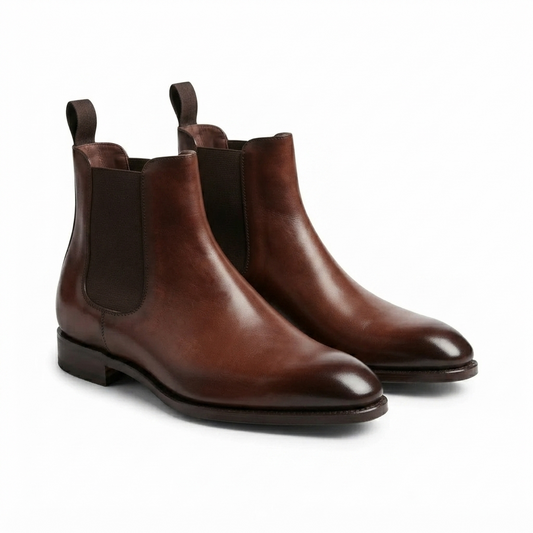
Goodyear welted Oxford shoes or a pair of Chelsea boots, both available in welted construction, and reserve cemented pairs for occasional or seasonal wear.
You can also explore the full men's formal shoes range, or browse the complete Goodyear welted and cemented collections side by side before deciding.
Caring for Either Construction

Regardless of which construction you choose, basic care extends the life of the shoe significantly. Rotate pairs so leather and soles get 24 to 48 hours to dry out between wears, use shoe trees to maintain shape, and clean and condition the leather regularly. Goodyear welted shoes benefit most from periodic resoling before the welt itself wears down, while cemented shoes benefit from gentler handling since the glue bond cannot be repaired once it fails.
For a full maintenance routine by leather type, see LexaItaliano's shoe care guide and leather guide.
Frequently Asked Questions
1. Is Goodyear welt always better than cemented?
Not always. Goodyear welt is better for durability, repairability, and long-term value, but cemented shoes can be the smarter choice for occasional wear, tight budgets, or lightweight comfort needs.
2. Can cemented shoes be resoled at all?
Cemented shoes can sometimes have a new sole glued on top of the worn one, but this is a temporary fix rather than a true repair, and it rarely restores the original fit or comfort.
3. How long do Goodyear welted shoes actually last?
With proper care and periodic resoling, Goodyear welted shoes commonly last 15 to 25 years, since the upper is rarely the part that wears out first.
4. Do Goodyear welted shoes need a long break-in period?
Most wearers need two to four weeks of regular wear before the cork filling and leather upper fully adjust to the shape of the foot.
5. Which construction is better for humid or rainy climates?
Goodyear welt construction generally performs better in wet conditions because the stitched welt channel is sealed and the double-layer sole adds a moisture barrier that a glued sole does not have.
6. Is there a middle option between Goodyear welt and cemented?
Yes, Blake stitching and Blake-rapid construction sit between the two, offering some resoling capability with a lighter, more flexible profile than a full Goodyear welt.
Final Word
Choosing between Goodyear welt and cemented construction comes down to how long you want the shoe to last and how much you are willing to pay upfront. Goodyear welt is the stronger long-term investment for anyone who wears formal shoes regularly, while cemented construction remains a practical, budget-friendly option for lighter use. Compare both constructions directly on LexaItaliano before you buy, using the
Goodyear welted and cemented pages, and reach out through the FAQ or custom shoes page if you need help picking the right construction for your use case.


GET SPRING SUMMER LOOKBOOK
Block Quote
Lexaitaliano
Every pair of shoes from LexaItaliano is a masterpiece, crafted with passion and precision. Discover the perfect blend of Italian luxury, impeccable design, and lasting comfort, elevating your style with each step.
At LexaItaliano, we believe that great shoes do more than just complete an outfit—they tell a story. Our collection combines heritage craftsmanship with modern sophistication, offering you shoes that define your style and stand the test of time.
From classic Oxfords to stylish loafers, LexaItaliano offers a curated selection of shoes that combine unparalleled craftsmanship and refined design. Experience the perfect fit, style, and luxury that only Italian-made shoes can provide.